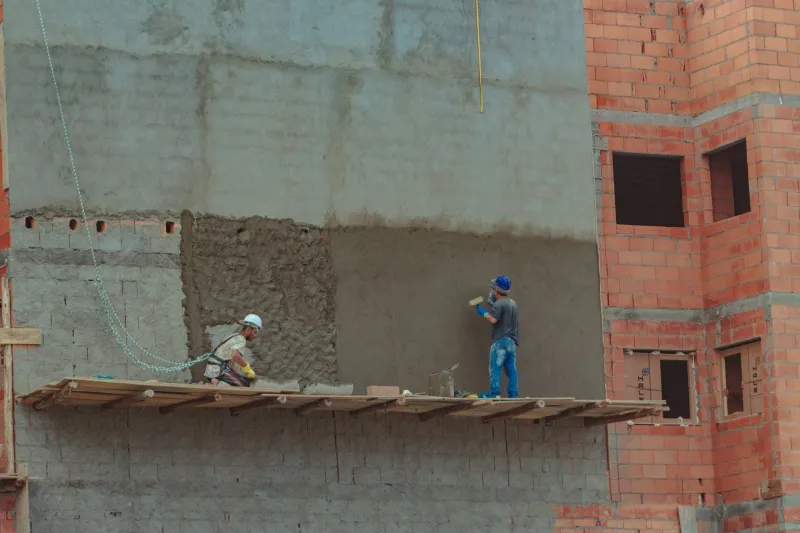
The Assumption Audit: Testing a Fire Strategy Against the Works Programme
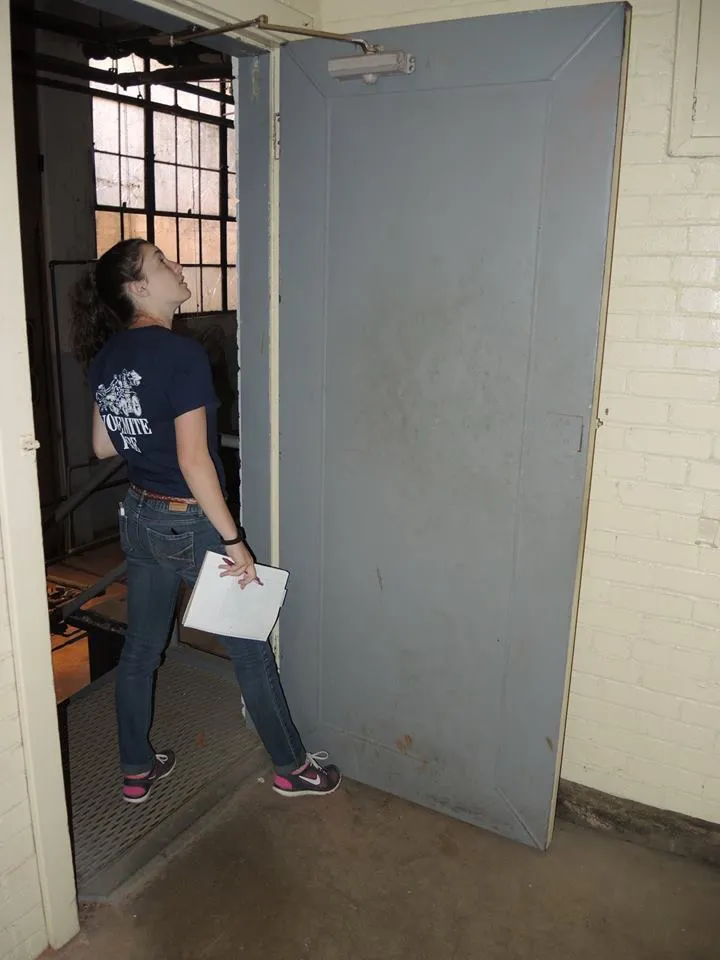
Photo: NPS, Public domain, via Wikimedia Commons
Most commercial buildings carry a fire strategy that nobody has read since the day it was signed off. It sits in the operations manual, referenced in the fire risk assessment, and assumed to remain true. Then a fit-out begins, a wall moves, a stair is temporarily closed, a service riser is opened for a cable pull, and the document quietly stops describing the building it was written for.
That gap is not usually the result of negligence. It arises because the fire strategy is treated as a planning artefact rather than an operational control. In 2026, with refurbishment activity concentrated in occupied stock and clients under pressure to shorten programmes, the gap is worth closing deliberately.
A Strategy Is a Set of Assumptions
A fire strategy is not a drawing. It is a chain of reasoning: that this compartment will hold for a stated period, that this route offers an alternative means of escape, that this door closes, that this alarm is audible in that room, that the responding crew will find the building as described.
Every one of those statements is a dependency. Each depends on a physical condition, a management arrangement, or both. A refurbishment disturbs physical conditions by definition and often disturbs management arrangements as a side effect, because the people who normally hold the building's routines are absorbed by the project.
The Regulatory Reform (Fire Safety) Order 2005 places the duty on the responsible person to keep the assessment current. It does not say the assessment must be updated weekly during works, but the duty to review when there is a material change is not discretionary. A material change is exactly what a strip-out is.
The Four Assumptions Works Most Often Break
Compartmentation. New openings for ducts, conduit, drainage and data cabling are the commonest cause of a compartment losing its integrity. Fire stopping is a specialist trade, frequently subcontracted late, and rarely verified by anyone with authority to reject the work. The finished wall looks correct; the penetration behind the ceiling grid does not.
Escape routes. Temporary hoardings, material storage and site cabins are placed for the convenience of the works. They narrow corridors, obstruct final exits and occasionally block a route the strategy counts as an alternative. Travel distances quoted in the original assessment cease to be achievable.
Signage and wayfinding. Escape signage is designed for people who know the building. During works, the population includes contractors and visitors who do not. A route that has changed without the signage changing is a route that will not be used in an emergency.
Detection and warning. Isolations for hot works, dust contamination of detectors, and partial commissioning of new systems all create windows in which the building's warning arrangement is degraded. Those windows need to be known, bounded and covered by interim measures.
Temporary Conditions Have a Habit of Persisting
The most expensive fire risks are rarely the ones created deliberately. They are the ones created temporarily and never reversed. A door held open by a wedge during a delivery becomes a door propped open as standard practice. A compromised compartment is signed off as complete because the finish looks right. A temporary escape route becomes the only route because the permanent one was handed over incomplete.
The control that prevents this is not more paperwork. It is a named person with the authority to say the building is not yet as described, and a schedule that records what is currently true rather than what is intended.
An Audit Before Mobilisation
Before contractors take possession, four questions are worth answering in writing.
- What does the current strategy assume, and where is that written down? If the answer is a PDF from a previous project, the audit starts there. Extract the assumptions into a short schedule: compartment lines, protected routes, maximum occupancies, detection zones, evacuation arrangements.
- Which of those assumptions will the works disturb, and when? Map the disturbances against the programme. A compartment breached in week six and sealed in week fourteen is a fourteen-week exposure, not a two-day inconvenience.
- Who owns the interim condition? Responsibility must sit with a named individual on the client side, supported by the principal contractor's fire arrangements. Shared ownership in practice means no ownership.
- How will changes be authorised? Any deviation from the strategy — a route closed, an isolation extended, a compartment left open overnight — should require sign-off through the same change control process used for cost and time.
Change Control as Fire Control
Projects already have a mechanism for managing deviation: the change register. Fire-related deviations belong in it, with the same discipline applied to cost. A compartment left unsealed for a fortnight is a variation to the building's performance, and it should be recorded, accepted by someone senior, and closed out with evidence.
The evidence point matters. A contractor's confirmation that fire stopping has been completed is a statement of intent. A photograph of the penetration, taken before the ceiling closes, with the location recorded against the drawing, is a record. Where the Building Safety Act 2022 applies, that record feeds directly into the golden thread; where it does not, it still protects the landlord at the next assessment.
The Handover Question
Completion certificates confirm that works meet the specification. They do not confirm that the building still matches its fire strategy. Someone has to compare the two.
That comparison should happen before practical completion, not after the site team has demobilised and the drawings have been filed. It involves walking the escape routes, testing the doors, checking the signage against the as-built layout, verifying that isolation permits have been closed, and confirming that the fire risk assessment has been reviewed and reissued to reflect the building as it now stands.
Holding the Pen
The fire strategy is only valid while someone is accountable for its accuracy. During a project, that accountability should be explicit, documented in the appointment, and exercised at defined points on the programme rather than invoked after an incident.
A refurbishment does not have to compromise a building's fire safety. It only does so when the strategy is left on the shelf while the building changes beneath it. Keeping the document live — and testing it against the works at intervals — is a discipline, not an overhead, and it is one of the quieter markers of a programme that will finish without unwelcome surprises.