The Case for Boring: Why Reliability Outperforms Innovation in UK Fit-Out

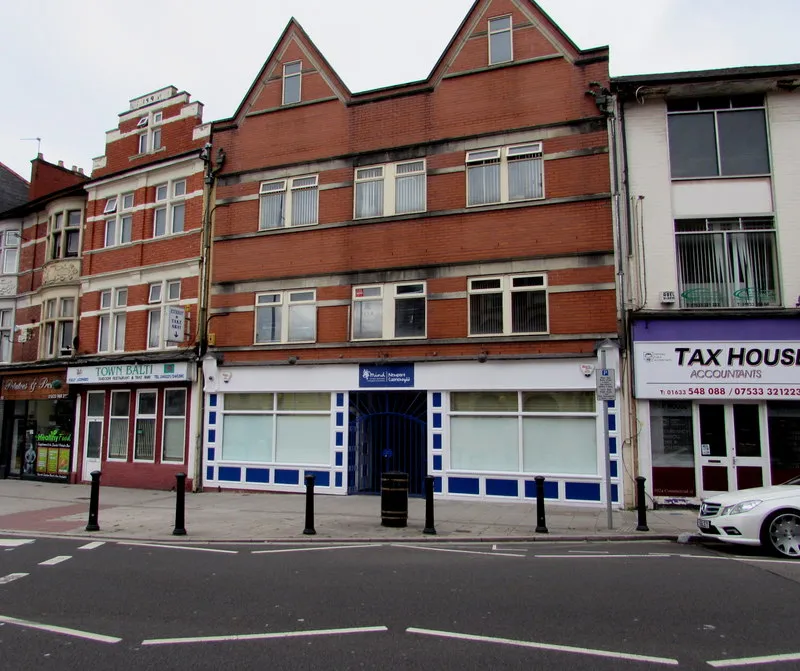
Photo: Betty Longbottom, CC BY-SA 2.0, via Wikimedia Commons
There is a particular kind of pitch that has become familiar in UK fit-out procurement. It features mood boards, a rhetoric of transformation, and at least one slide using the word 'disruptive' as though it were a compliment. It is often impressive. It is rarely the reason a project succeeds.
Ask the client on the other side of the table what they actually want, and the vocabulary changes entirely. They want the space finished on the date in the lease. They want the invoice to resemble the quotation. They want to be told about a problem while it is still small enough to solve. None of that is disruptive. All of it is dependable, and in the conditions of 2026 that quality has become scarcer — and therefore more valuable — than novelty.
The lowest number is rarely the lowest cost
Everyone in the industry says this, and it keeps being ignored. A tender returns fifteen per cent below the field, and the temptation is considerable, particularly when the capital budget has already been trimmed twice. But a low bid is a statement about assumptions, not about price. The gap is usually made up somewhere: in provisional sums that later firm up in one direction only, in an under-resourced site team, in specification substitutions that only become visible at handover, or in a programme that was never realistic in the first place.
By the time those gaps appear, the client has lost the negotiating position they held at tender. The extended preliminaries, the acceleration costs, the delay to occupation and the internal management time spent chasing all sit outside the original comparison. Judged on outturn cost, the cheap bid frequently finishes behind the field — and it takes the credibility of the whole procurement exercise down with it.
What dependable delivery looks like in practice
Reliability in fit-out is not a personality trait. It is a set of visible, checkable behaviours. A named team that stays on the job from preconstruction to handover. A programme that reflects actual lead times rather than aspirational ones. A procurement schedule that has been tested against the supply chain rather than assembled from a template. Monthly cost reporting against an agreed cost plan, with variances explained before they are discovered.
It also shows in the less glamorous places: a snagging regime that closes items rather than accumulating them, a document control system that produces a coherent handover pack, and a commissioning process that leaves the occupier able to run the building rather than merely able to switch it on.
The disruption trap
None of this is an argument against better ways of working. It is an argument against novelty adopted for its own sake, on a live project, at the client's risk.
Consider what happens when an untested product is introduced late in the design, or a system is specified that only one supplier can install to a lead time nobody has verified. In a residential or higher-risk building, the consequences are magnified: fire strategy assumptions, product certification and the evidence trail required under the Building Safety Act 2022 all have to hold together. An unproven substitution can delay sign-off for weeks, and the paperwork burden falls squarely on the party with the lease to honour.
Innovation has its place — in the design stage, with time to test it, and with a client who understands and accepts the risk being taken. Imported into delivery as a cost-saving gesture, it becomes something else entirely.
2026 rewards the steady hand
Commercial property in the UK is not enjoying a period of generous margins. Occupiers are scrutinising service charge expenditure and demanding that space work harder than it did five years ago. Landlords are carrying void risk, and every month of delayed possession is a month of foregone income and an extra month of rates, insurance and security. Energy performance expectations are tightening, and the data needed to demonstrate improvement has to come from somewhere.
In that environment, certainty has a price, and clients increasingly know it. The value of a fit-out partner is measured less by what they promise in the pitch and more by whether the second project looks like the first: same standard, same communication, same absence of drama. Repeat appointment is the only meaningful endorsement in this market.
Three questions worth asking
Before any appointment, it is worth testing the proposer on specifics rather than adjectives. Ask what their last three projects achieved against their original completion dates, and ask for the reasons behind any variance. Ask who, by name, will run the site, and what else that person will be doing at the same time. Ask how a cost overrun would reach your desk — and how quickly.
The answers will tell you more than any brand film. Reliable commercial property and project support is not a slogan we adopted because it sounded safe; it is a description of what clients actually buy when the budget is fixed, the lease is signed and the clock is running. In 2026, that is not the conservative choice. It is the commercial one.